🎉 Up to 70% Off Selected ItemsShop Sale


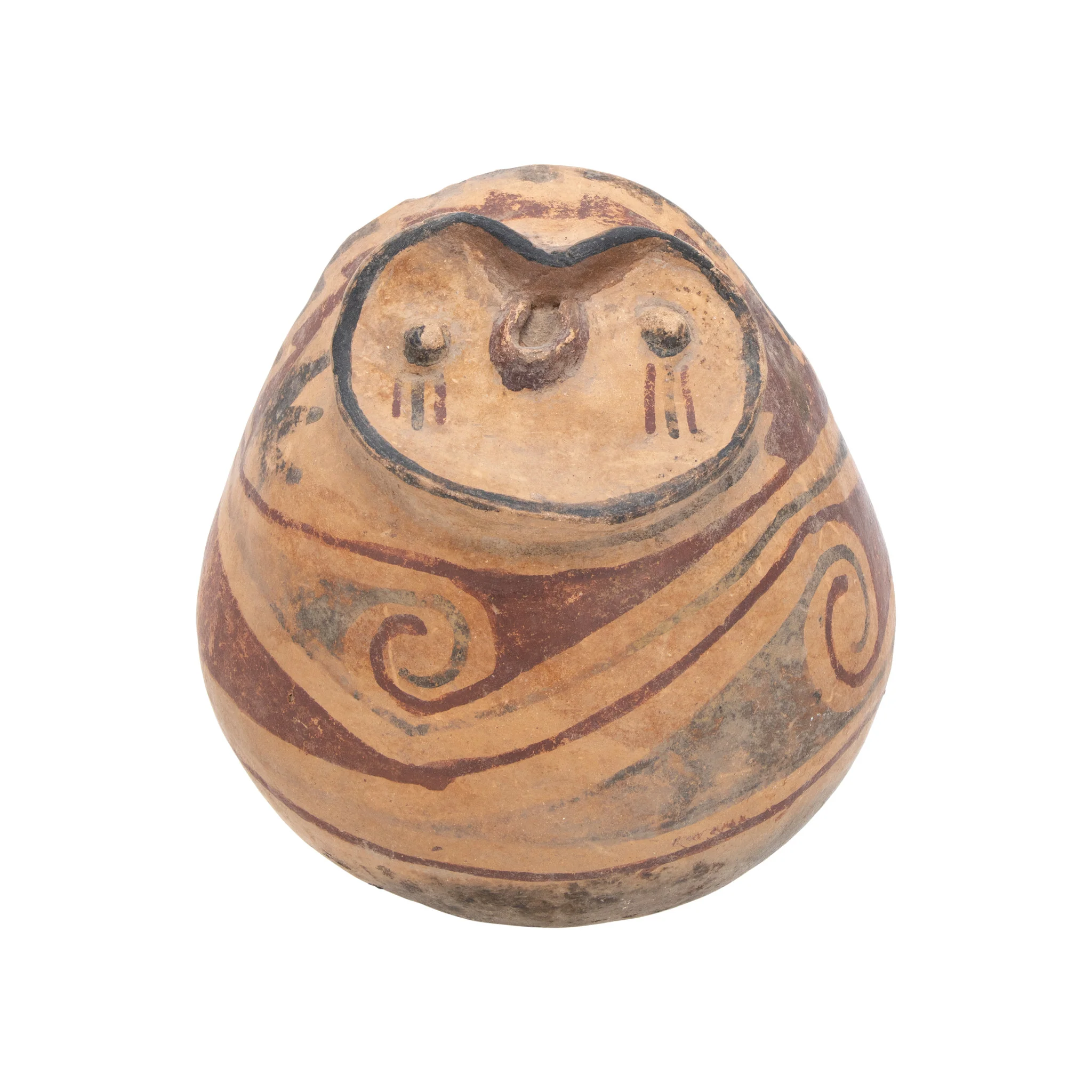


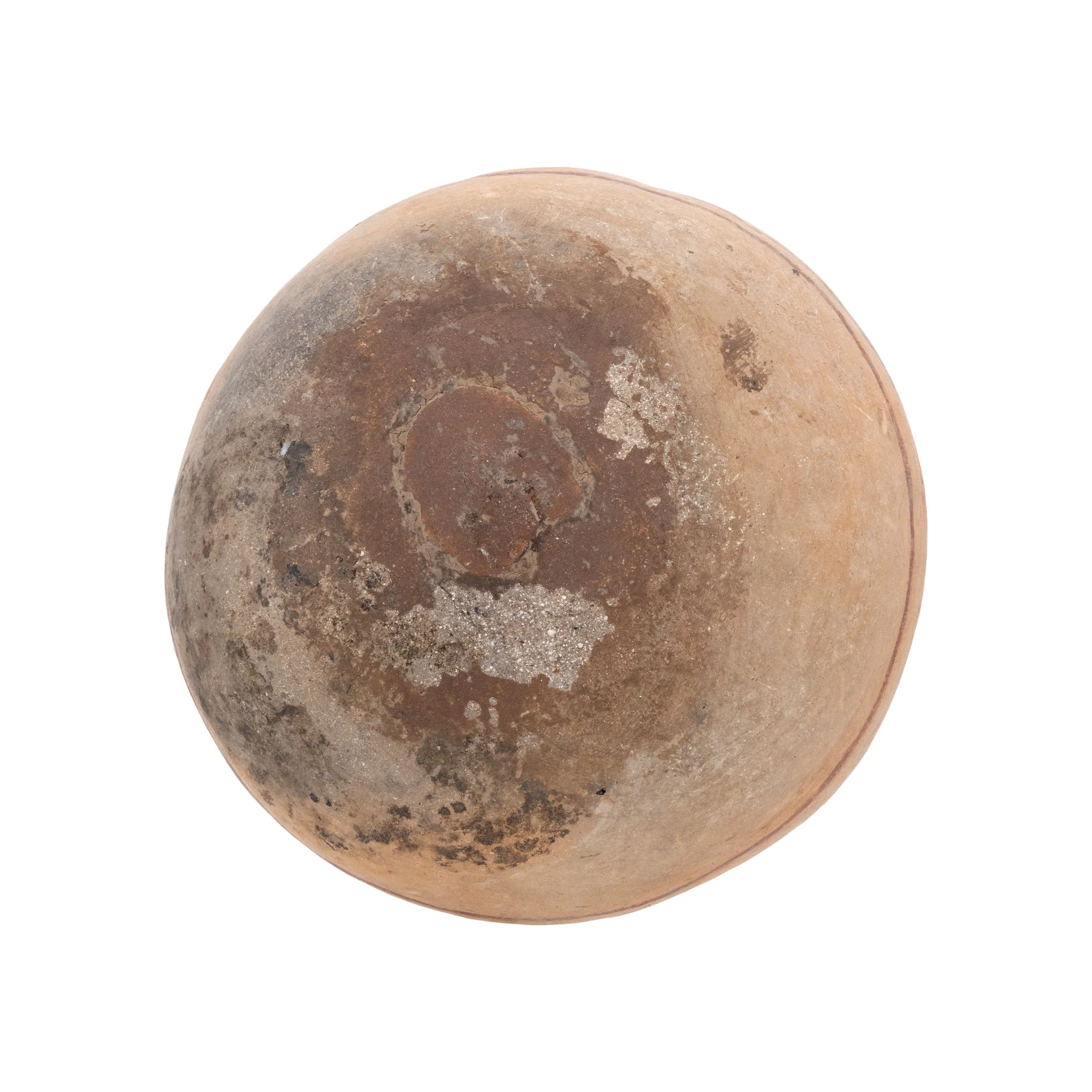
Casas Grandes Pottery Owl
Pre-Columbian, Northern Mexico, Casas Grandes, ca. 1250 to 1400 CE. A Babicora Polychrome style jar the form of an owl with a bulbous body and a heart-shaped face, the vessel's opening on the verso, and black and red spirals painted along the surface. Small 1.5 inch area of repair to the base using new material to fill a hole and small fissure. Chips and small losses along the opening rim behind the head. Hairline fissures radiating from rim. Some fading to pigments, but overall nice preservation to form. Earthen deposits on the interior and scattered manganese deposits on the exterior. 6"D x 6 1/2"H
Casas Grandes (Spanish for “Great Houses” also known as Paquime) is a prehistoric archaeological site in the northern Mexican state of Chihuahua. Casas Grandes is one of the largest and most complex Mogollon culture sites in the region. Settlement began after 1130 CE and would see the larger buildings developed into multi-storied dwellings after 1350 CE. The community was abandoned approximately 1450 CE. Casas Grandes is regarded as one of the most significant Mogollon archaeological zones in the northwestern Mexico region, linking it to other sites in Arizona and New Mexico, and exhibiting the expanse of the Mogollon sphere of influence.
Casas Grandes (Spanish for “Great Houses” also known as Paquime) is a prehistoric archaeological site in the northern Mexican state of Chihuahua. Casas Grandes is one of the largest and most complex Mogollon culture sites in the region. Settlement began after 1130 CE and would see the larger buildings developed into multi-storied dwellings after 1350 CE. The community was abandoned approximately 1450 CE. Casas Grandes is regarded as one of the most significant Mogollon archaeological zones in the northwestern Mexico region, linking it to other sites in Arizona and New Mexico, and exhibiting the expanse of the Mogollon sphere of influence.
PERIOD: Prehistoric
ORIGIN: Southwest - Casas Grandes, Native American
SIZE: 6"D x 6 1/2"H
$4,500.00
Casas Grandes Pottery Owl—
$4,500.00
Product Information
Product Information
Shipping & Returns
Shipping & Returns
Description
Pre-Columbian, Northern Mexico, Casas Grandes, ca. 1250 to 1400 CE. A Babicora Polychrome style jar the form of an owl with a bulbous body and a heart-shaped face, the vessel's opening on the verso, and black and red spirals painted along the surface. Small 1.5 inch area of repair to the base using new material to fill a hole and small fissure. Chips and small losses along the opening rim behind the head. Hairline fissures radiating from rim. Some fading to pigments, but overall nice preservation to form. Earthen deposits on the interior and scattered manganese deposits on the exterior. 6"D x 6 1/2"H
Casas Grandes (Spanish for “Great Houses” also known as Paquime) is a prehistoric archaeological site in the northern Mexican state of Chihuahua. Casas Grandes is one of the largest and most complex Mogollon culture sites in the region. Settlement began after 1130 CE and would see the larger buildings developed into multi-storied dwellings after 1350 CE. The community was abandoned approximately 1450 CE. Casas Grandes is regarded as one of the most significant Mogollon archaeological zones in the northwestern Mexico region, linking it to other sites in Arizona and New Mexico, and exhibiting the expanse of the Mogollon sphere of influence.
Casas Grandes (Spanish for “Great Houses” also known as Paquime) is a prehistoric archaeological site in the northern Mexican state of Chihuahua. Casas Grandes is one of the largest and most complex Mogollon culture sites in the region. Settlement began after 1130 CE and would see the larger buildings developed into multi-storied dwellings after 1350 CE. The community was abandoned approximately 1450 CE. Casas Grandes is regarded as one of the most significant Mogollon archaeological zones in the northwestern Mexico region, linking it to other sites in Arizona and New Mexico, and exhibiting the expanse of the Mogollon sphere of influence.
PERIOD: Prehistoric
ORIGIN: Southwest - Casas Grandes, Native American
SIZE: 6"D x 6 1/2"H