🎉 Up to 70% Off Selected ItemsShop Sale



Nuu-chah-Nulth Seattle Totem by Rick Williams
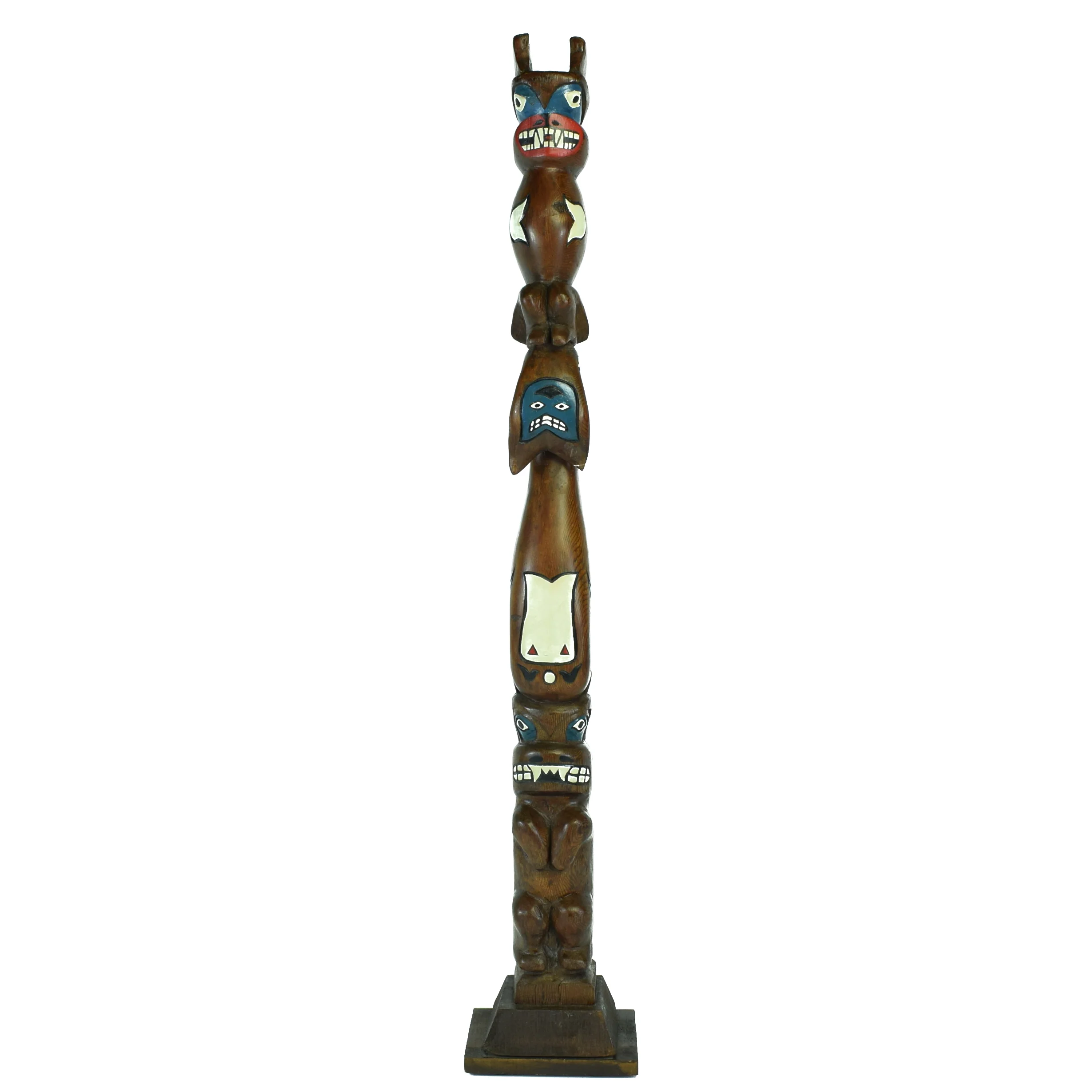
Nuu-chah-Nulth/Ditidaht model of the Seattle Totem by carver Rick Williams (1955 - ). 24"H x 3"
Although totem poles have long been associated with Seattle, the familiar Northern Northwest Coast form of monumental, freestanding, multifigured totem poles were not historically an Indigenous artform in Puget Sound. This association can largely be traced back to the theft of a monumental Tlingit pole by a group of Seattle businessmen on a steamship trip to Southeastern Alaska in 1899.
The men who stole the totem returned to Seattle and presented it to the city to be raised in Pioneer Square, near the waterfront. [1] There have been several iterations of this pole over the last 125 years, which remains a major local landmark and has come to be known as “The Seattle Totem.”
Rick Williams is the current patriarch of the Williams family of Northwest Coast model totem pole carvers. The Williams family have been prolific carvers for Seattle area curio shops, particularly the Ye Olde Curiosity Shop, since the time of Rick’s grandfather, Sam Williams (1884-1979).
This complex model pole showcases Rick’s skill with minute details in both his carving and painting and is a fine example of Rick’s work. There is a carved notation on the verso: “2 RED CEDAR SEATTLE POLE HAND CARVED BY RICK WILLIAMS.”
1. Robin K. Wright. How Did Totem Poles Become a Symbol of Seattle? 19 November 2015. https://www.burkemuseum.org/news/how-did-totem-poles-become-symbol-seattle. Accessed 26 November 2025.
Although totem poles have long been associated with Seattle, the familiar Northern Northwest Coast form of monumental, freestanding, multifigured totem poles were not historically an Indigenous artform in Puget Sound. This association can largely be traced back to the theft of a monumental Tlingit pole by a group of Seattle businessmen on a steamship trip to Southeastern Alaska in 1899.
The men who stole the totem returned to Seattle and presented it to the city to be raised in Pioneer Square, near the waterfront. [1] There have been several iterations of this pole over the last 125 years, which remains a major local landmark and has come to be known as “The Seattle Totem.”
Rick Williams is the current patriarch of the Williams family of Northwest Coast model totem pole carvers. The Williams family have been prolific carvers for Seattle area curio shops, particularly the Ye Olde Curiosity Shop, since the time of Rick’s grandfather, Sam Williams (1884-1979).
This complex model pole showcases Rick’s skill with minute details in both his carving and painting and is a fine example of Rick’s work. There is a carved notation on the verso: “2 RED CEDAR SEATTLE POLE HAND CARVED BY RICK WILLIAMS.”
1. Robin K. Wright. How Did Totem Poles Become a Symbol of Seattle? 19 November 2015. https://www.burkemuseum.org/news/how-did-totem-poles-become-symbol-seattle. Accessed 26 November 2025.
PERIOD: 20th Century
ORIGIN: Northwest Coast - Nootka, Native American
SIZE: 24"H x 3"W
$875.00
Original: $2,500.00
-65%Nuu-chah-Nulth Seattle Totem by Rick Williams—
$2,500.00
$875.00Product Information
Product Information
Shipping & Returns
Shipping & Returns
Description
Nuu-chah-Nulth/Ditidaht model of the Seattle Totem by carver Rick Williams (1955 - ). 24"H x 3"
Although totem poles have long been associated with Seattle, the familiar Northern Northwest Coast form of monumental, freestanding, multifigured totem poles were not historically an Indigenous artform in Puget Sound. This association can largely be traced back to the theft of a monumental Tlingit pole by a group of Seattle businessmen on a steamship trip to Southeastern Alaska in 1899.
The men who stole the totem returned to Seattle and presented it to the city to be raised in Pioneer Square, near the waterfront. [1] There have been several iterations of this pole over the last 125 years, which remains a major local landmark and has come to be known as “The Seattle Totem.”
Rick Williams is the current patriarch of the Williams family of Northwest Coast model totem pole carvers. The Williams family have been prolific carvers for Seattle area curio shops, particularly the Ye Olde Curiosity Shop, since the time of Rick’s grandfather, Sam Williams (1884-1979).
This complex model pole showcases Rick’s skill with minute details in both his carving and painting and is a fine example of Rick’s work. There is a carved notation on the verso: “2 RED CEDAR SEATTLE POLE HAND CARVED BY RICK WILLIAMS.”
1. Robin K. Wright. How Did Totem Poles Become a Symbol of Seattle? 19 November 2015. https://www.burkemuseum.org/news/how-did-totem-poles-become-symbol-seattle. Accessed 26 November 2025.
Although totem poles have long been associated with Seattle, the familiar Northern Northwest Coast form of monumental, freestanding, multifigured totem poles were not historically an Indigenous artform in Puget Sound. This association can largely be traced back to the theft of a monumental Tlingit pole by a group of Seattle businessmen on a steamship trip to Southeastern Alaska in 1899.
The men who stole the totem returned to Seattle and presented it to the city to be raised in Pioneer Square, near the waterfront. [1] There have been several iterations of this pole over the last 125 years, which remains a major local landmark and has come to be known as “The Seattle Totem.”
Rick Williams is the current patriarch of the Williams family of Northwest Coast model totem pole carvers. The Williams family have been prolific carvers for Seattle area curio shops, particularly the Ye Olde Curiosity Shop, since the time of Rick’s grandfather, Sam Williams (1884-1979).
This complex model pole showcases Rick’s skill with minute details in both his carving and painting and is a fine example of Rick’s work. There is a carved notation on the verso: “2 RED CEDAR SEATTLE POLE HAND CARVED BY RICK WILLIAMS.”
1. Robin K. Wright. How Did Totem Poles Become a Symbol of Seattle? 19 November 2015. https://www.burkemuseum.org/news/how-did-totem-poles-become-symbol-seattle. Accessed 26 November 2025.
PERIOD: 20th Century
ORIGIN: Northwest Coast - Nootka, Native American
SIZE: 24"H x 3"W